






Hereford — buy or sell


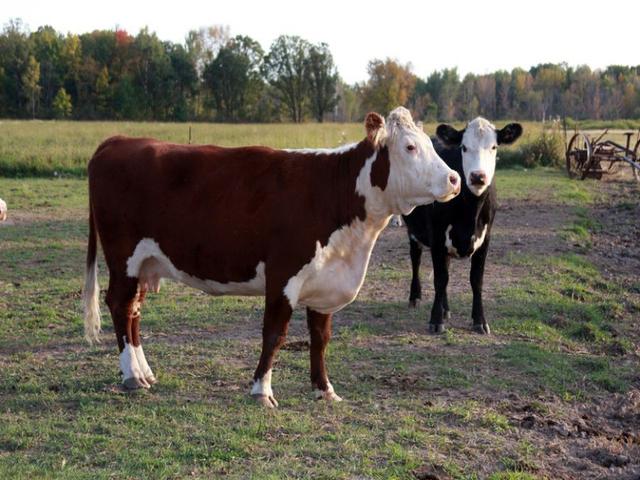
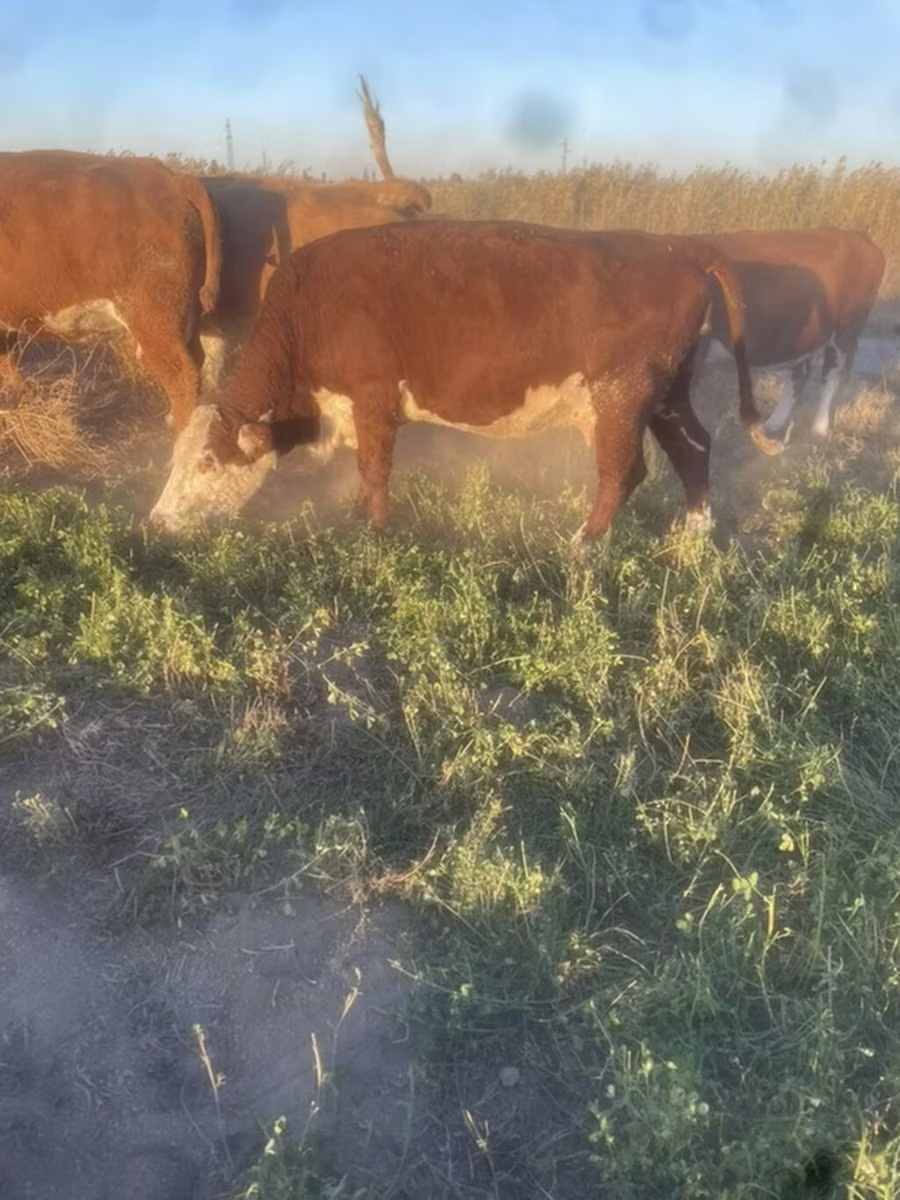
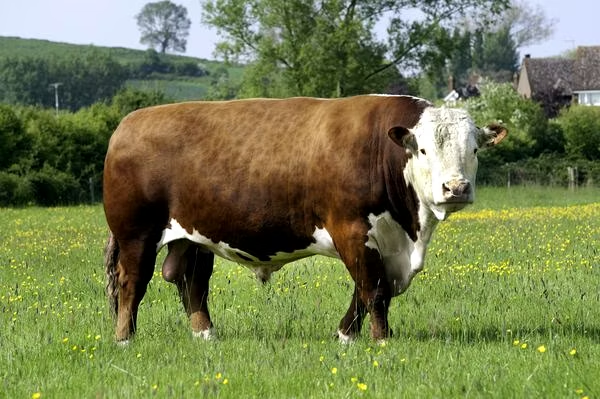
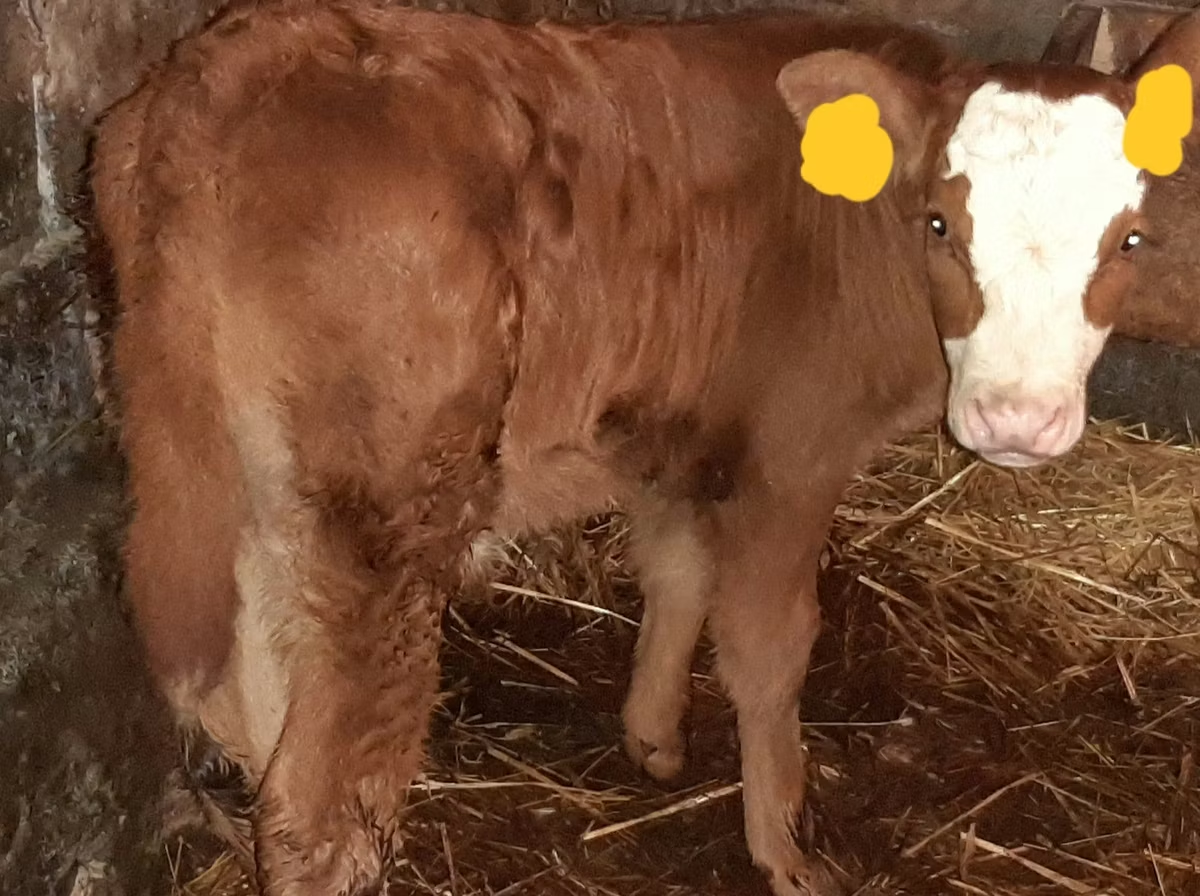
History of the Hereford breed. The blood of this cattle flows in the veins of many breeds. They are called cows without defects. One of the oldest and most popular breeds of cattle. The breed got its name based on geographical principles. They first appeared in the 18th century in the English county of Herefordshire on the border with Wales. Before that, in the southern and western regions of England, not large red cattle were raised, but the characteristic of the rural area was the Welsh, and it was also the Welsh border cattle, large black cows. It was the red bulls and Welsh cows that became the ancestors of the Hereford breed. The Welsh provided good milk yields even though they grazed in harsh conditions in mountainous areas with sparse vegetation, which gave them endurance. The improvement of the cattle was aimed at making the animal even stronger and using them not only as a source of meat but also as draft animals. In Herefordshire in 1738, Benjamin Tomkins Sr. began commercial breeding of Herefords. Therefore, he is considered the founder of the breed. In 1817, Hereford cattle were first exported to the USA. Since the beginning of the 20th century, Herefords have spread worldwide, and breeders are constantly working on improving the breed, particularly focusing on constitution and muscle mass. Exterior. Dark red coat with shades of cherry color, but the head, neck, withers, brisket, belly, lower part of the limbs, and tail tip are white. This is a characteristic feature of Herefords, inherited by all descendants of this cattle. The body structure is typical for all beef breeds. The animals have a barrel-shaped, wide, and deep body, muscular shoulders, a voluminous back and loin, a wide and straight hindquarters with well-developed musculature. The brisket protrudes significantly. The average height is 125 cm. The depth of the chest is 72 cm. The chest circumference is 197 cm. The diagonal length of the body is 153 cm. In summer, the coat is short, while in winter it lengthens. The skin is elastic, and the nose mirror is light pink. Dairy traits are not significantly expressed. The horns are straight or drooping down, light-colored with darkening closer to the tips. There is also a polled type of cattle. The average weight of adult bulls is 800-1300 kg, cows 450-600 kg, but can sometimes reach 800 kg. The age of the first calving is 24-30 months. Cows with twins are also encountered. Conditions of keeping. The best option for Herefords is free-range grazing on pastures.
Log in to learn more
Sign inWhat to feed
Diet. The diet includes hay, and occasionally they can be treated with oats. They are so undemanding that they can eat just straw. The breed is adapted to various pastures and gains weight well; for a 1 kg increase, Hereford calves consume 5.3-6.2 feed units. In the fields, Herefords are capable of eating any grass, including coarse and tough weeds. This does not affect the quality of the meat, so during the spring-autumn period, the basis of the diet consists of green grass. In general, they eat everything. Meat obtained from grass-fed pastures is tastier, more natural, and the bacteria in the rumen and other stomach compartments function properly on a grass diet. Livestock breeders note that Herefords are so undemanding that they can survive on hay alone, but this is an extreme option. Overall, the livestock's diet varies by season and includes hay, silage, bran, grain, and sometimes oats. Animals gain weight quickly on grass-based feeds; bulls are given legume and cereal hay. Many note that pasture conditions are sufficient for the livestock's full nutrition, and Herefords do not require supplementary feeding, but each livestock breeder has their own practices, so concentrated coarse feed, bone meal, root vegetables, particularly beet pulp, and mineral supplements and phosphorus are also found in the diet.
Physical parameters
Male Weight: 800–1300 kg
Female weight: 450–600 kg
Male height: 125–145 cm
Female height: 114–135 cm
Habitat Range
Afghanistan
Albania
Algeria
American Samoa
Andorra
Angola
Anguilla
Antigua & Barbuda
Argentina
Armenia
Aruba
Australia
Austria
Azerbaijan
Bahamas
Bahrain
Bangladesh
Barbados
Belarus
Belgium
Belize
Benin
Bermuda
Bhutan
Bolivia
Bosnia & Herzegovina
Botswana
Brazil
British Virgin Islands
Brunei
Bulgaria
Burkina Faso
Burundi
Cambodia
Cameroon
Canada
Cape Verde
Caribbean Netherlands
Cayman Islands
Central African Republic
Chad
Chile
China
Colombia
Comoros
Congo - Brazzaville
Congo - Kinshasa
Cook Islands
Costa Rica
Croatia
Cuba
Curaçao
Cyprus
Czechia
Côte d’Ivoire
Denmark
Djibouti
Dominica
Dominican Republic
Ecuador
Egypt
El Salvador
Equatorial Guinea
Estonia
Eswatini
Ethiopia
Faroe Islands
Fiji
Finland
France
French Guiana
French Polynesia
Gabon
Gambia
Georgia
Germany
Ghana
Gibraltar
Greece
Greenland
Grenada
Guadeloupe
Guam
Guatemala
Guernsey
Guinea
Guinea-Bissau
Guyana
Haiti
Honduras
Hong Kong SAR China
Hungary
Iceland
India
Indonesia
Iran
Iraq
Ireland
Isle of Man
Israel
Italy
Jamaica
Japan
Jersey
Jordan
Kazakhstan
Kenya
Kiribati
Kosovo
Kuwait
Kyrgyzstan
Laos
Latvia
Lebanon
Lesotho
Liberia
Libya
Liechtenstein
Lithuania
Luxembourg
Macao SAR China
Madagascar
Malawi
Malaysia
Maldives
Mali
Malta
Marshall Islands
Martinique
Mauritania
Mauritius
Mayotte
Mexico
Micronesia
Moldova
Monaco
Mongolia
Montenegro
Morocco
Mozambique
Myanmar (Burma)
Namibia
Nauru
Nepal
Netherlands
New Caledonia
New Zealand
Nicaragua
Niger
Nigeria
North Korea
North Macedonia
Northern Mariana Islands
Norway
Oman
Pakistan
Palau
Palestinian Territories
Panama
Papua New Guinea
Paraguay
Peru
Philippines
Poland
Portugal
Puerto Rico
Qatar
Romania
Russia
Rwanda
Réunion
Samoa
San Marino
Saudi Arabia
Senegal
Serbia
Seychelles
Sierra Leone
Singapore
Sint Maarten
Slovakia
Slovenia
Solomon Islands
Somalia
South Africa
South Korea
South Sudan
Spain
Sri Lanka
St. Kitts & Nevis
St. Lucia
St. Martin
St. Vincent & Grenadines
Sudan
Suriname
Sweden
Switzerland
Syria
São Tomé & Príncipe
Taiwan
Tajikistan
Tanzania
Thailand
Timor-Leste
Togo
Tonga
Trinidad & Tobago
Tunisia
Turkmenistan
Turks & Caicos Islands
Tuvalu
Türkiye
U.S. Virgin Islands
Uganda
Ukraine
United Arab Emirates
United Kingdom
United States
Uruguay
Uzbekistan
Vanuatu
Venezuela
Vietnam
Wallis & Futuna
Western Sahara
Yemen
Zambia
Zimbabwe
Åland Islands
Frequently Asked Questions
How much does Hereford weigh?
Adult animal: male — 800–1300 kg, female — 450–600 kg.
How tall is Hereford?
Height at the withers: male — 125–145 cm, female — 114–135 cm.
Where does Hereford come from?
Country of origin — United Kingdom.
Where is Hereford bred?
The breed is common in: Afghanistan, Albania, Algeria, American Samoa, Andorra, Angola, Anguilla, Antigua & Barbuda.
What should Hereford be fed?
Diet.
Q&A
No questions yet. Ask the first!
Log in to ask a question
Listings in your area