


















Ayrshire — 购买或出售


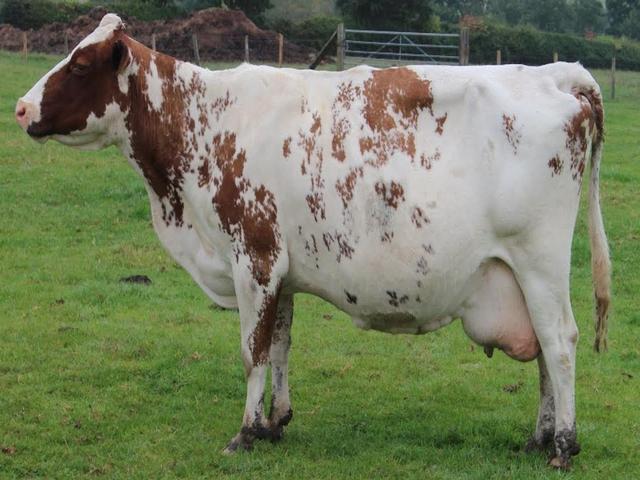
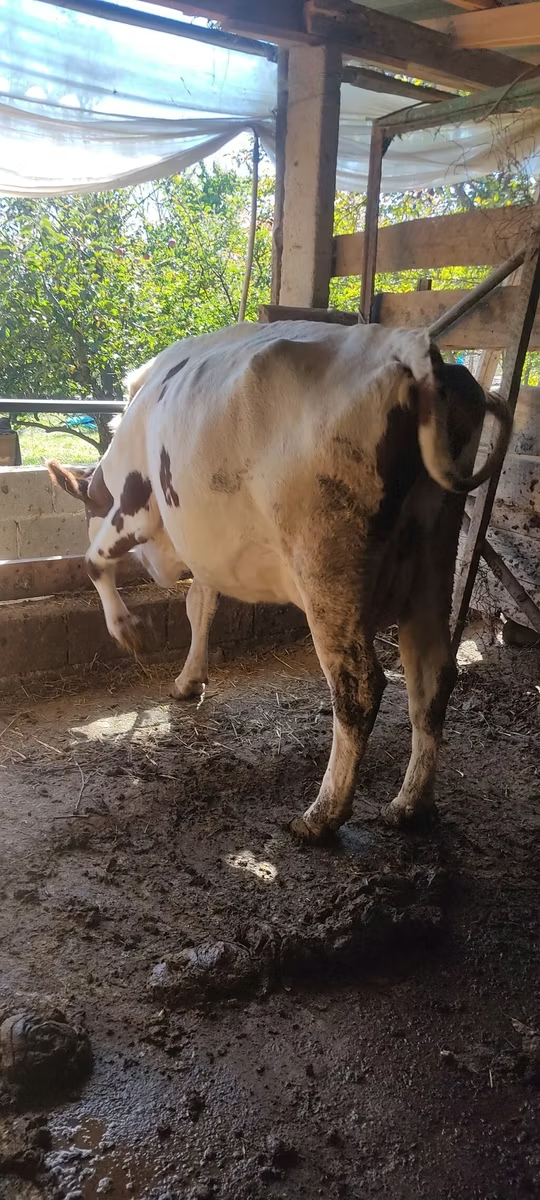
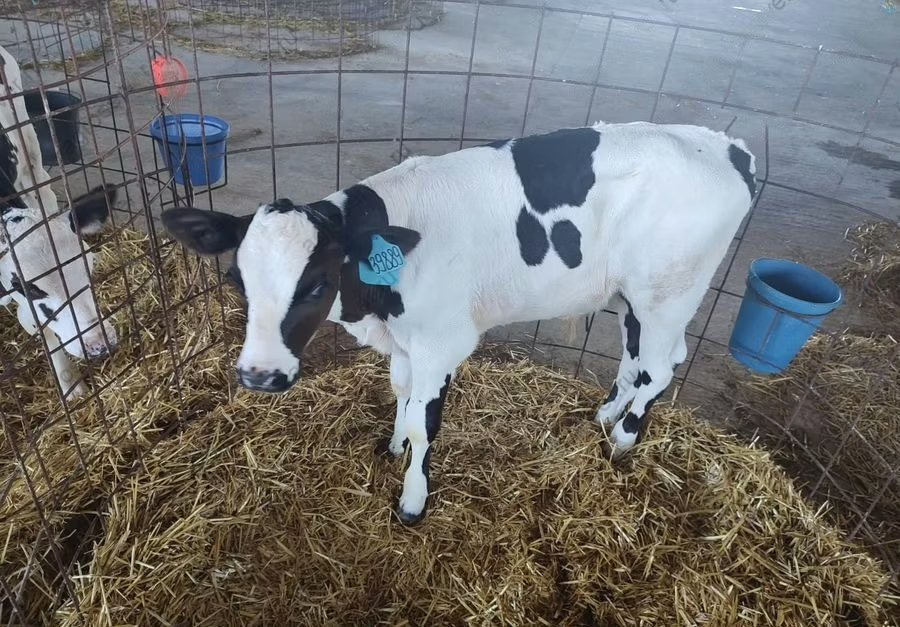
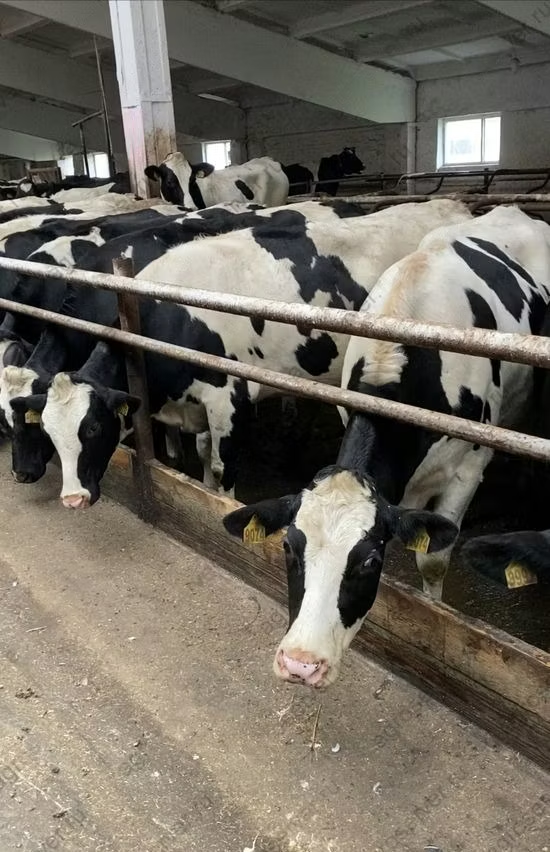
History of the breed. Ayrshire cows are magnificent animals whose coat is characterized by a mottled coloration, including various shades of brown and reddish colors, which stand out particularly well on lighter areas. Often, the red color predominates in the coat of these cows, which may be interspersed with white spots. Ayrshire cows, originating from Scotland in Ayrshire County, represent a breed that was developed in the late 18th century by crossing local heifers with Dutch, Teeswater, and Alderney bulls. The goal of this process was to create a breed with high productivity. The idea proved successful, and by the mid-19th century, Ayrshire cows became popular. In 1845, the breed was introduced to Finland, where it was discovered to have a unique feature—excellent resistance to cold climates. This quality made Ayrshire cows particularly valuable, and today a large portion of the modern population of this breed is found in Finland, where there are about 140,000 head. Exterior. Ayrshire cows are compact in size: their height at the withers is approximately 125 cm, and their weight is around 450 kg. Bulls are larger, with a mass that can reach 700–800 kg. These animals have a harmonious build: a long and deep body, a straight and wide back, a narrow chest, and a brisket. The head is proportional to the body, with a wide muzzle. The legs are short but straight and strong. Ayrshire cows have strong hooves and well-developed musculature, allowing them to feel comfortable not only on plains but also in mountainous conditions. The rump of the cows is long and wide, especially in the area of the hooks and the ischial tuberosities. The udder is cup-shaped, elastic, and smooth, with a dense network of blood vessels. The teats are evenly developed, wide, conical or cylindrical in shape, and about 6 cm long. Housing conditions. These cows easily adapt to different housing conditions. In pastures, they independently find succulent feed. Recently, the Ayrshire breed has become increasingly sought after in organic livestock systems. It is particularly well-suited for the northern and eastern regions of the country, where the animals easily endure winter in unheated facilities. The main requirement is that the facility has good ventilation, water that does not freeze, and a thick layer of bedding. In some farms, Ayrshire cattle are kept under shelters year-round.
登录以了解更多
登录喂什么
Diet. In the summer, cows are fed fresh grass, which they receive in the pasture. In winter, their diet consists of hay enriched with vitamins and minerals. Ayrshires easily adapt to seasonal changes in nutrition. Even with a sparse diet, their milk yield does not decrease, but the quality of the milk may decline. The diet of cows consists of three parts: The main part includes hay, husks, straw, chaff, and bran in various proportions. The balancing feed consists of wheat, oats, cake, meal, and soybean meal. The combined feed consists of concentrates given in amounts of up to 3–4 kg per day. Fruits and vegetables are added to the diet as sources of vitamins: beets, carrots, cabbage, tops, and pumpkin. Potatoes and concentrates with high starch content can negatively affect milk quality. A small amount of silage and haylage is given, but ground chalk is added in the amount of 30–40 g.
物理参数
雄性体重: 700–800 公斤
雌性体重: 400–450 公斤
雄性身高: 110–135 厘米
雌性身高: 110–135 厘米
栖息地
不丹
东帝汶
中国
中国澳门特别行政区
中国香港特别行政区
中非共和国
丹麦
乌克兰
乌兹别克斯坦
乌干达
乌拉圭
乍得
也门
亚美尼亚
以色列
伊拉克
伊朗
伯利兹
佛得角
俄罗斯
保加利亚
克罗地亚
关岛
冈比亚
冰岛
几内亚
几内亚比绍
列支敦士登
刚果(布)
刚果(金)
利比亚
利比里亚
加拿大
加纳
加蓬
匈牙利
北马其顿
北马里亚纳群岛
南苏丹
南非
博茨瓦纳
卡塔尔
卢旺达
卢森堡
印度
印度尼西亚
危地马拉
厄瓜多尔
叙利亚
古巴
台湾
吉尔吉斯斯坦
吉布提
哈萨克斯坦
哥伦比亚
哥斯达黎加
喀麦隆
图瓦卢
土库曼斯坦
土耳其
圣卢西亚
圣基茨和尼维斯
圣多美和普林西比
圣文森特和格林纳丁斯
圣马力诺
圭亚那
坦桑尼亚
埃及
埃塞俄比亚
基里巴斯
塔吉克斯坦
塞内加尔
塞尔维亚
塞拉利昂
塞浦路斯
塞舌尔
墨西哥
多哥
多米尼克
多米尼加共和国
奥兰群岛
奥地利
委内瑞拉
孟加拉国
安哥拉
安圭拉
安提瓜和巴布达
安道尔
密克罗尼西亚
尼加拉瓜
尼日利亚
尼日尔
尼泊尔
巴勒斯坦领土
巴哈马
巴基斯坦
巴巴多斯
巴布亚新几内亚
巴拉圭
巴拿马
巴林
巴西
布基纳法索
布隆迪
希腊
帕劳
库克群岛
库拉索
开曼群岛
德国
意大利
所罗门群岛
拉脱维亚
挪威
捷克
摩尔多瓦
摩洛哥
摩纳哥
文莱
斐济
斯威士兰
斯洛伐克
斯洛文尼亚
斯里兰卡
新加坡
新喀里多尼亚
新西兰
日本
智利
朝鲜
柬埔寨
根西岛
格林纳达
格陵兰
格鲁吉亚
比利时
毛里塔尼亚
毛里求斯
汤加
沙特阿拉伯
法国
法属圣马丁
法属圭亚那
法属波利尼西亚
法罗群岛
波兰
波多黎各
波斯尼亚和黑塞哥维那
泰国
泽西岛
津巴布韦
洪都拉斯
海地
澳大利亚
爱尔兰
爱沙尼亚
牙买加
特克斯和凯科斯群岛
特立尼达和多巴哥
玻利维亚
瑙鲁
瑞典
瑞士
瓜德罗普
瓦利斯和富图纳
瓦努阿图
留尼汪
白俄罗斯
百慕大
直布罗陀
科威特
科摩罗
科特迪瓦
科索沃
秘鲁
突尼斯
立陶宛
索马里
约旦
纳米比亚
缅甸
罗马尼亚
美国
美属维尔京群岛
美属萨摩亚
老挝
肯尼亚
芬兰
苏丹
苏里南
英国
英属维尔京群岛
荷兰
荷属加勒比区
荷属圣马丁
莫桑比克
莱索托
菲律宾
萨尔瓦多
萨摩亚
葡萄牙
蒙古
西撒哈拉
西班牙
贝宁
赞比亚
赤道几内亚
越南
阿塞拜疆
阿富汗
阿尔及利亚
阿尔巴尼亚
阿拉伯联合酋长国
阿曼
阿根廷
阿鲁巴
韩国
马尔代夫
马恩岛
马拉维
马提尼克
马来西亚
马约特
马绍尔群岛
马耳他
马达加斯加
马里
黎巴嫩
黑山
常见问题
Ayrshire有多重?
成年动物:公牛 — 700–800 公斤, 母牛 — 400–450 公斤。
Ayrshire有多高?
肩高:公牛 — 110–135 厘米, 母牛 — 110–135 厘米。
Ayrshire起源于哪里?
原产国 — 英国。
Ayrshire在哪里饲养?
该品种分布于:不丹, 东帝汶, 中国, 中国澳门特别行政区, 中国香港特别行政区, 中非共和国, 丹麦, 乌克兰。
Ayrshire吃什么?
Diet.
问答
还没有问题。第一个提问!
登录 以提问
您所在地区的分类信息